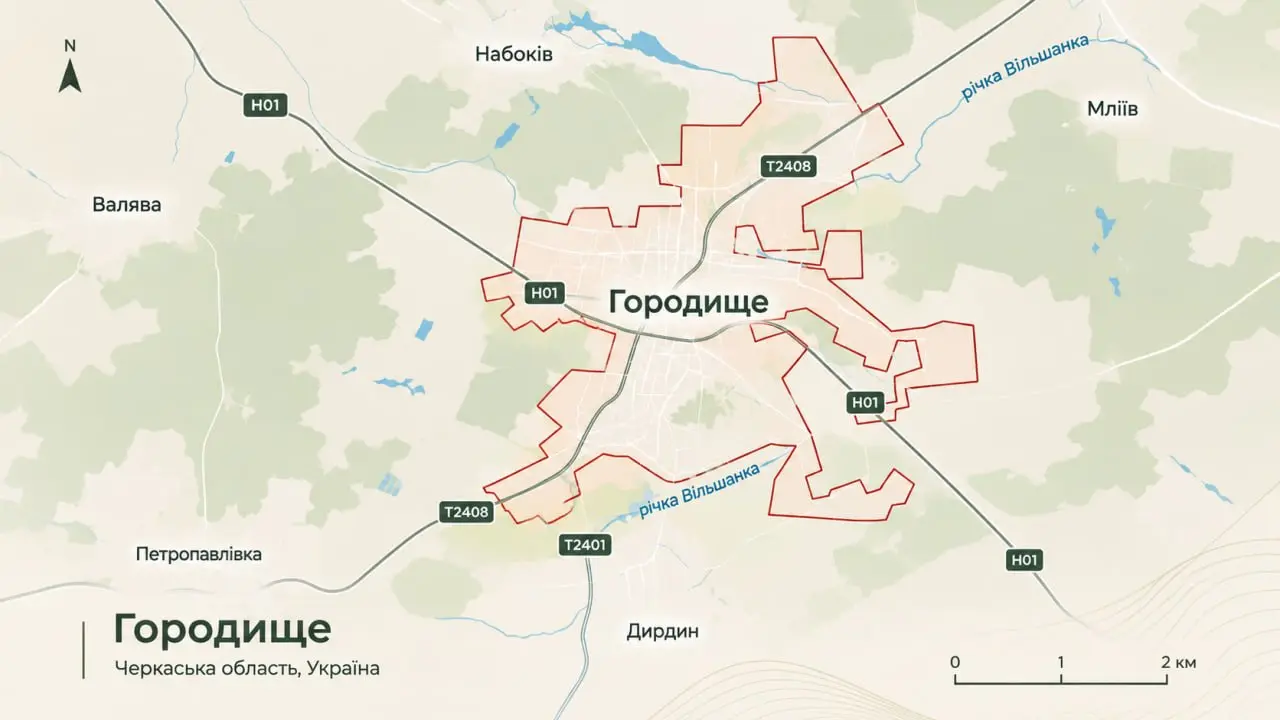
ГОРОДИЩЕ
The story of the people, places and memory of a Ukrainian town
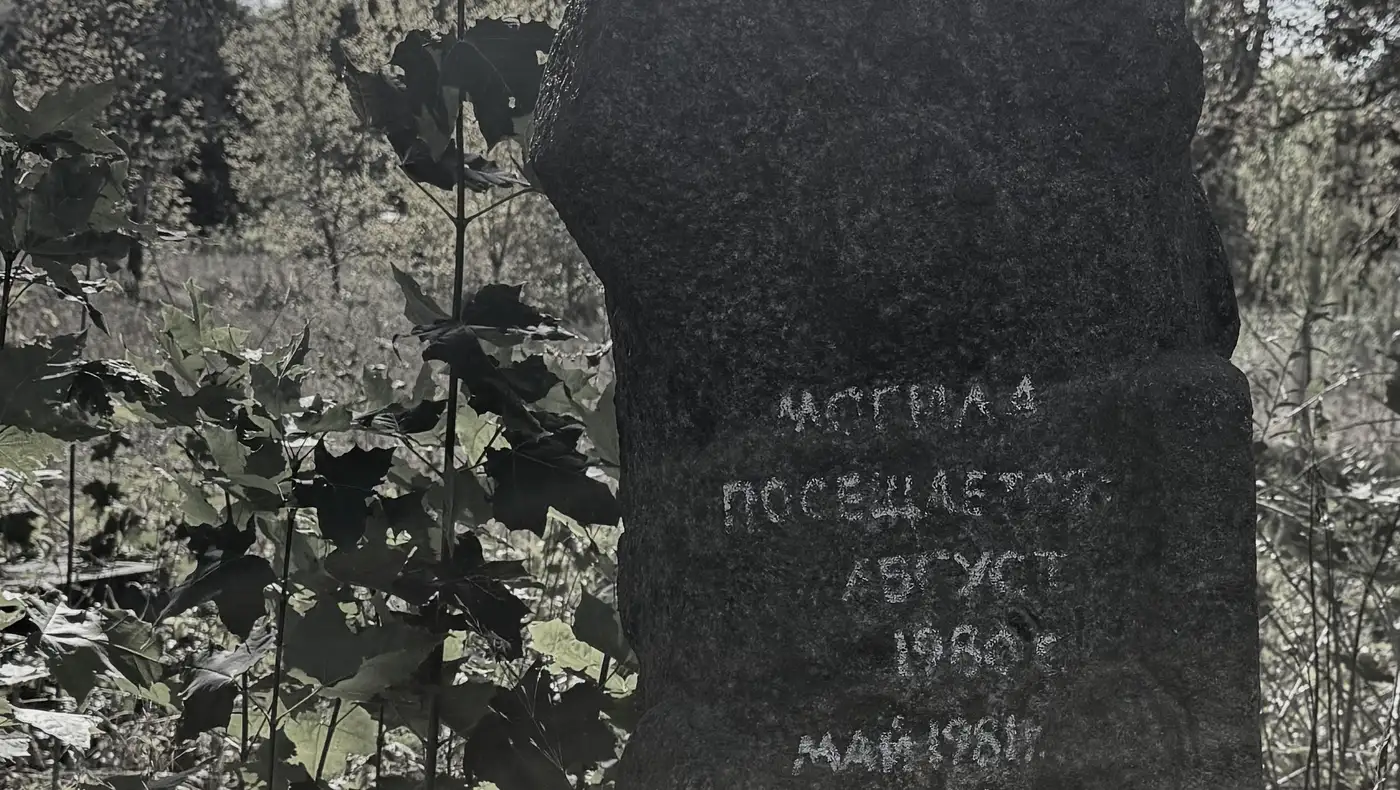
Paint on stone, the old Jewish cemetery of Horodyshche. Photographed on 2 October 2026.

“The grave is visited”
In the old Jewish cemetery of Horodyshche stands a stone on which someone wrote in paint: the grave is visited. August 1980. May 1981. Several more dates follow, now almost gone.
We do not know who wrote this. But it is how memory works in this town: it rests on the people who come back.
Much of the Jewish heritage of Horodyshche has all but vanished from the town. Yet documents, archival photographs, a few buildings, the old cemetery and sites of memory remain. This site brings them together.
Read the inscription line by lineEvery dot is a person
-
9,888
residents lived in the town and at the sugar works according to Lavrentii Pokhylevych in 1864. Every dot on this screen is one person.
-
3,064
of them were Jews, about 31%. Almost one resident in three. They did not live apart: the same streets, market, quarries, sugar works.
-
Streets
Shops, workshops, synagogues, a school, a hospital. Their life was an inseparable part of the history of Horodyshche.
-
500–600
Jews remained in the town in 1939. Between these figures lie the pogroms of 1919–1920, migration and social change.
-
29 March 1942
More than 300 Jews of the district were driven to the town police compound, then marched down the Mliiv road to the edge of the village of Mliiv, where they were shot. Most of those killed were the elderly, women and children.
-
Today
What remains on the map of the town are the places that can still be seen. This site exists so that they do not vanish.
The dots are laid out along present-day OpenStreetMap streets and do not show real addresses. The figures 9,888 and 3,064 follow Pokhylevych. For 1939 the scene shows 570 dots: three independent works give this number, other sources give 510.
List of sourcesTwo inscriptions

«граждан г. Городище и других районов»
citizens of the town of Horodyshche and other districts
The obelisk near Mliiv

«тільки тому, що вони були євреями»
only because they were Jews
The memorial at the cemetery, 2009
Almost seven kilometres lie between these stones. The first does not name the victims’ nationality. The second names nothing else.

Someone leaves small stones on the obelisk’s pedestal. Placing a stone on a grave is the traditional way of honouring the dead in Jewish culture.
All inscriptionsThe town was rewritten
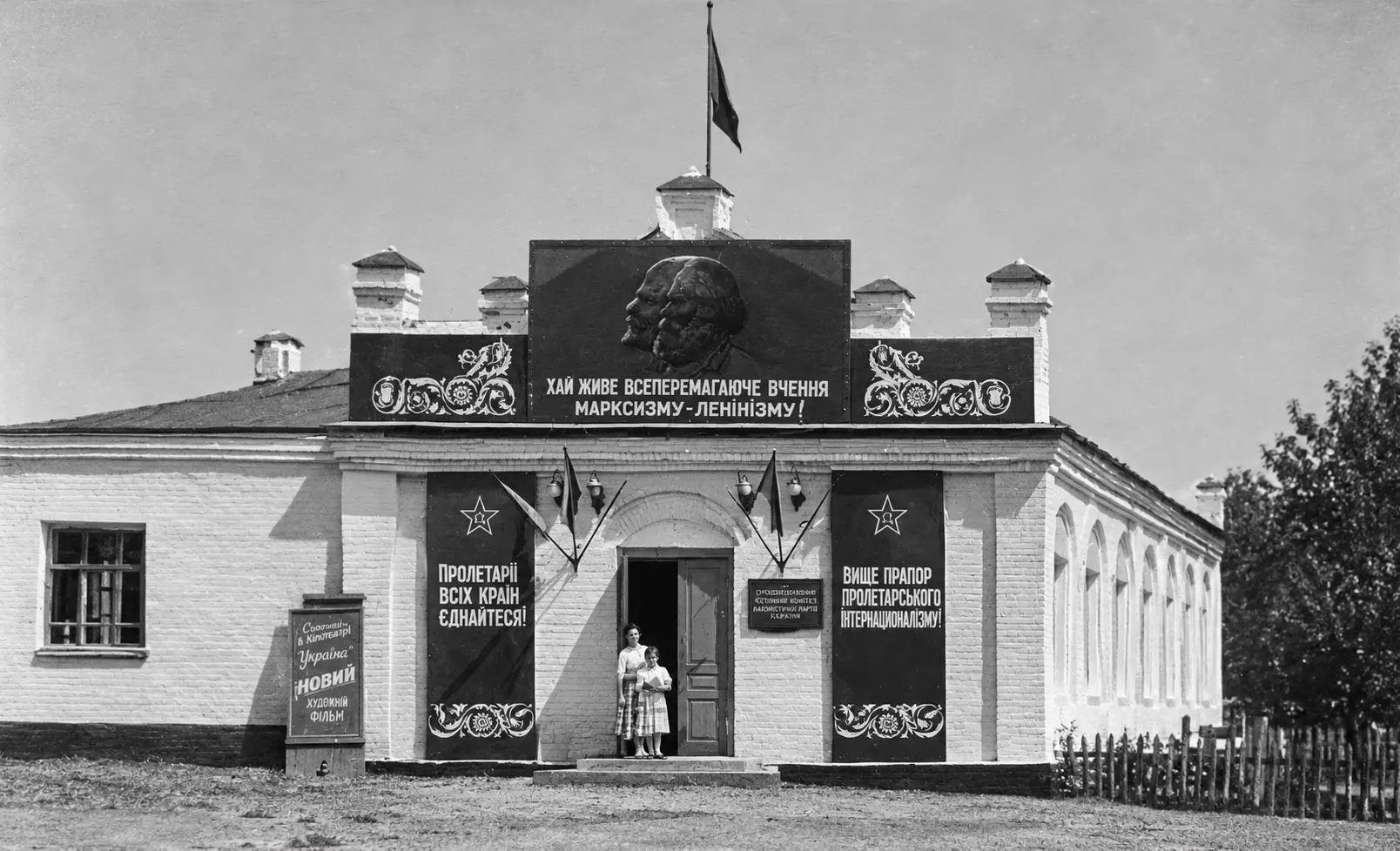
The synagogue in the town centre. In Soviet times its façade was covered with portraits and slogans, and in the 1970s the building was demolished. Peace Square stands there today.
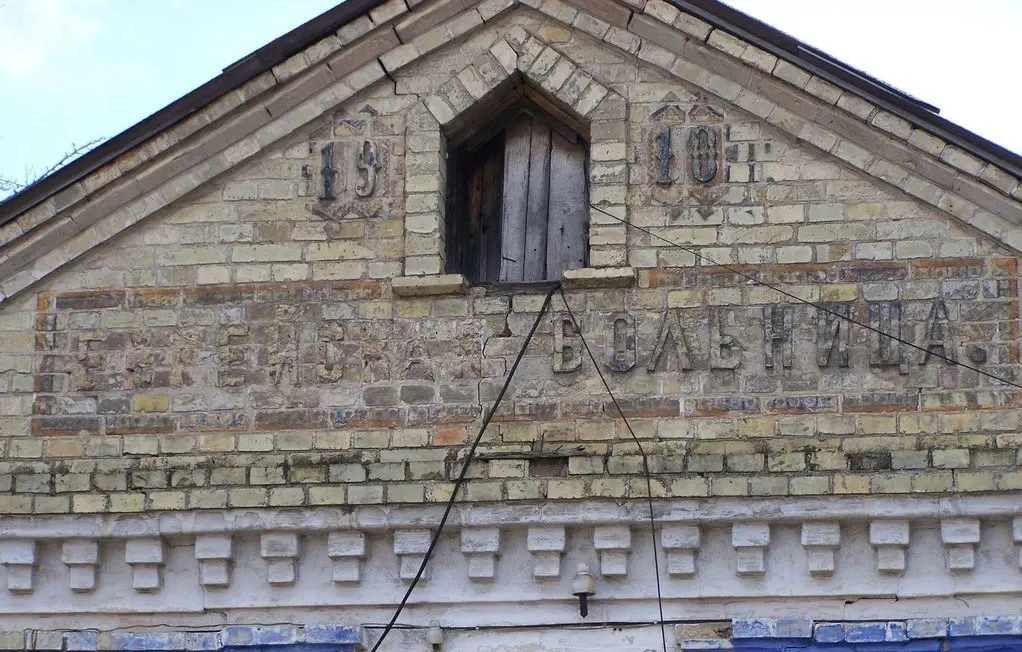
The 1910 hospital still stands. The word “ЕВРЕЙСКАЯ” (Jewish) on its gable was hacked off, but the brick has kept its outline.
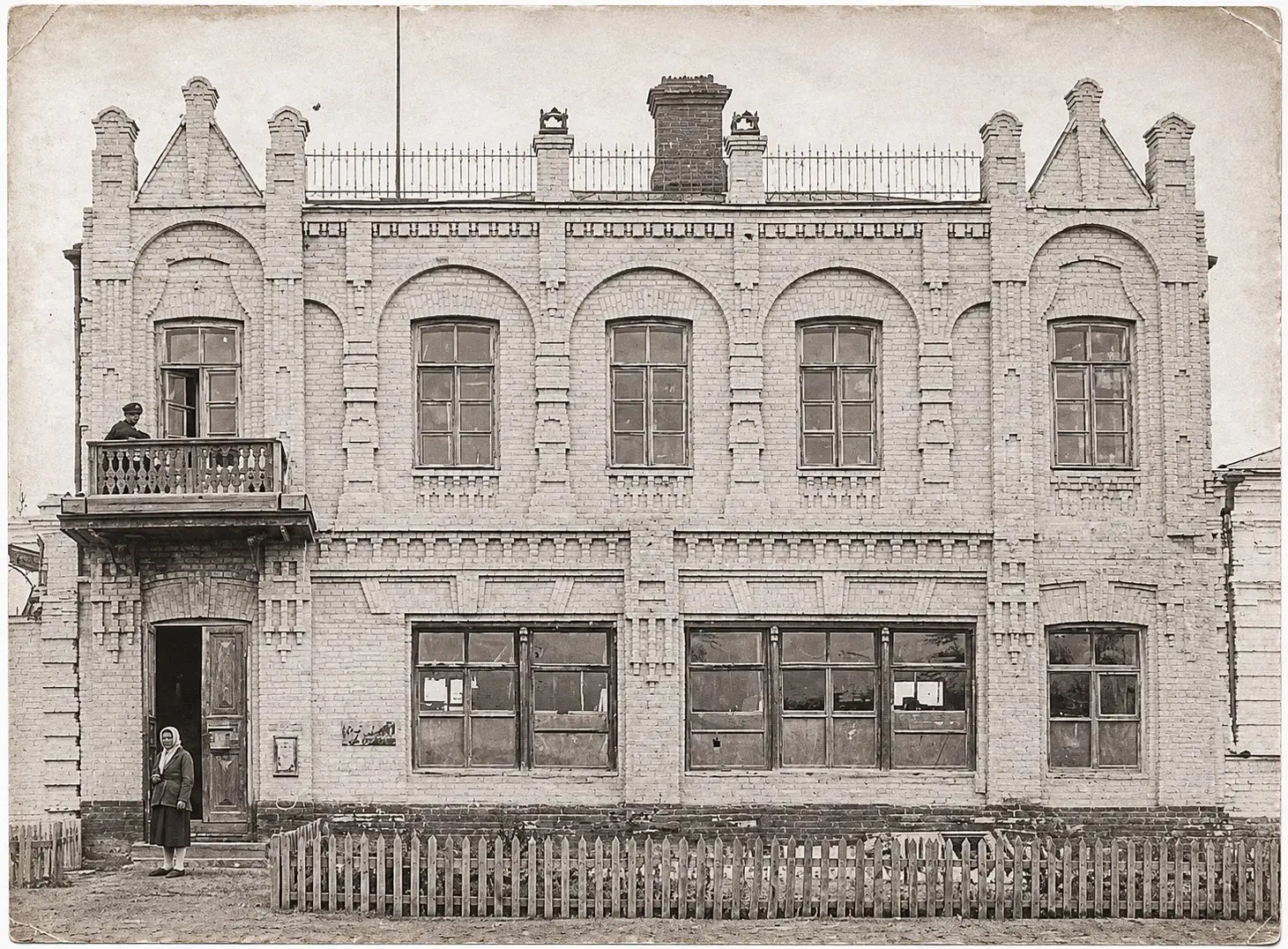
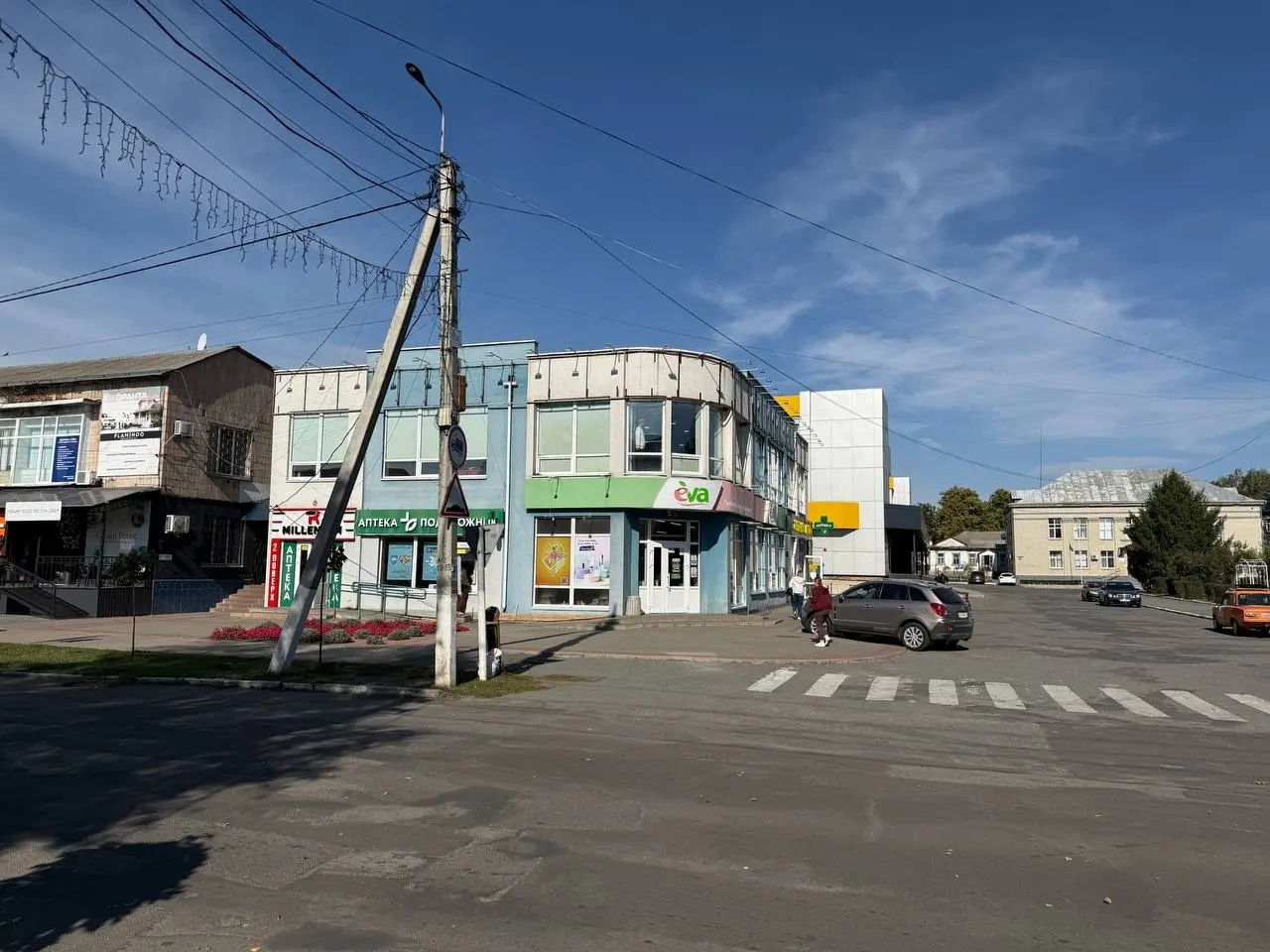
The building in the centre that housed a newspaper office and a printing press was demolished in the late 1980s. Modern buildings now stand where the trading rows once were.
The route
Some places survive to this day. Others exist only in photographs and documents. Where the exact spot has not been established, we do not mark it on the map as an address.
Open the map| No. | Place | State | What is known |
|---|---|---|---|
| 1 | The former Jewish hospital | Surviving place | The surviving historic building of the hospital built in 1910. Traces of an inscription remain on its façade, testifying to the institution’s original purpose. |
| 2 | The site of the former synagogue | Location being confirmed | The central part of Horodyshche, today’s Peace Square. The synagogue stood here; its building was demolished in the 1970s. Its appearance survives in historic photographs. |
| 3 | The Jewish cemetery | Surviving place | The surviving part of the old Jewish cemetery near the bus station. Historic gravestones remain here, keeping the names of several generations of residents. |
| 4 | The mass grave near Mliiv | Surviving place | The mass burial site of the victims of the Nazi shooting of 1942. Today it holds a memorial obelisk and a fenced plot. |
| 5 | The historic centre of Horodyshche | Location being confirmed | The space of former shops, workshops and houses. In the 20th century the central part of the town was substantially rebuilt. |
| 6 | The talmud-torah | Not located | The Jewish elementary school active in 1900. Its exact location and details of its work have not yet been established. |
| 7 | The other synagogues | Not located | In 1900 the town counted three synagogues. The location of two of them still has to be established. |
| 8 | Workshops and homes | Not located | The workshops and homes of Jewish residents, whose exact locations have not yet been established. Older residents still remembered them near today’s Peace Square. |
| 9 | The sand quarry | Not located | The site of the first mass shooting, 19 September 1941. About 40 Jewish men and teenage boys were killed on the outskirts of the town. Exactly where has not been established. |
Names
More than 300 people were killed in the ditch near Mliiv, about 40 at the sand quarry. We can name 21. The other names still have to be recovered.
Open the list of namesStill legible on the stones
- Khaskel Leizerov Brodsky the stone probably bears the word “killed”
- Rivka Zhivotovska 1893–1937
- Ester, daughter of Yosef around 1904
The Jews who lived in Horodyshche were people of Horodyshche just as I am.
Help preserve this memory
If you have archival photographs, family documents, memories or information about the Jewish community of Horodyshche, you can help complete this research.