Back to the route Place 4 of 9
The mass grave near Mliiv
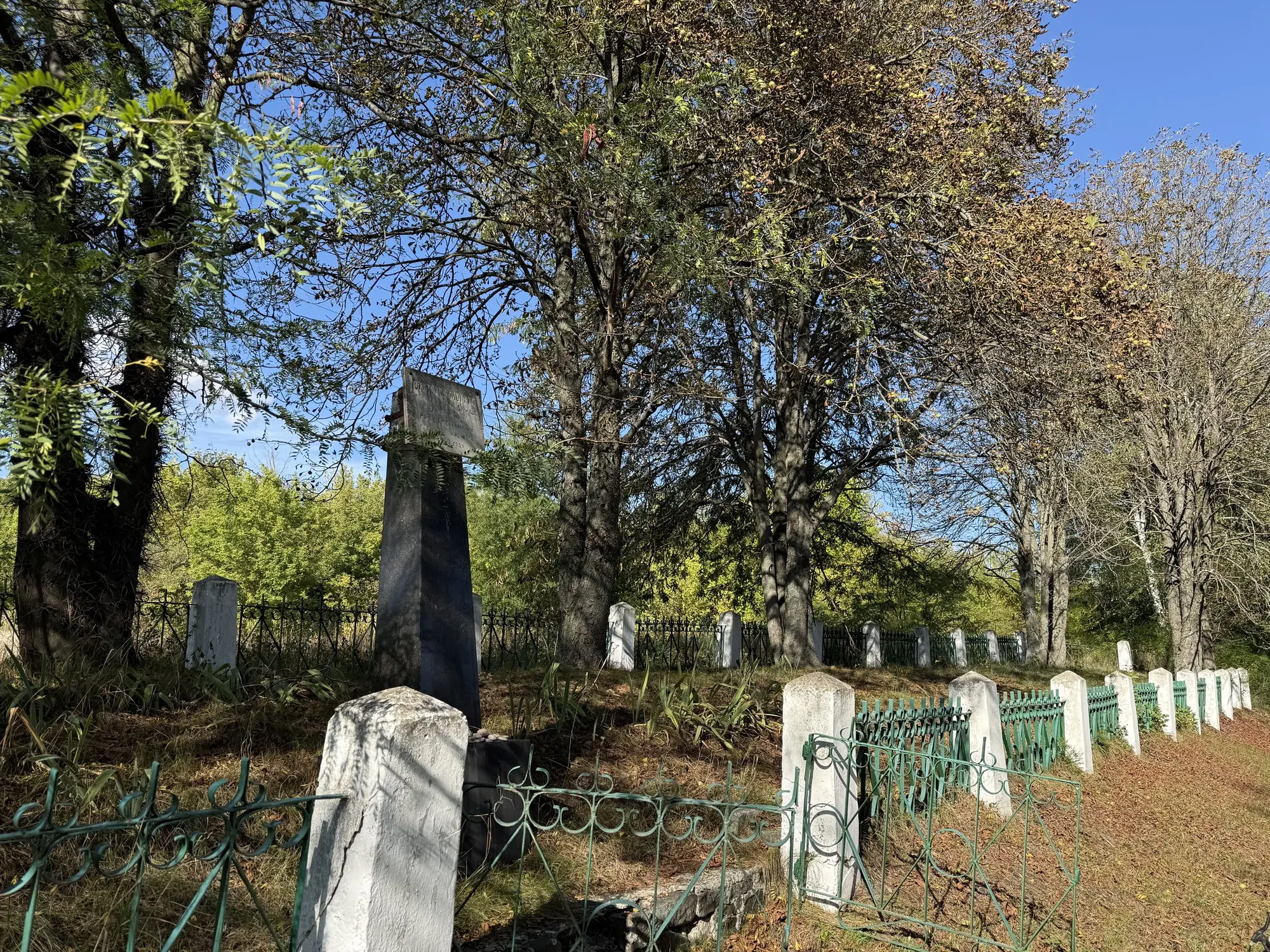
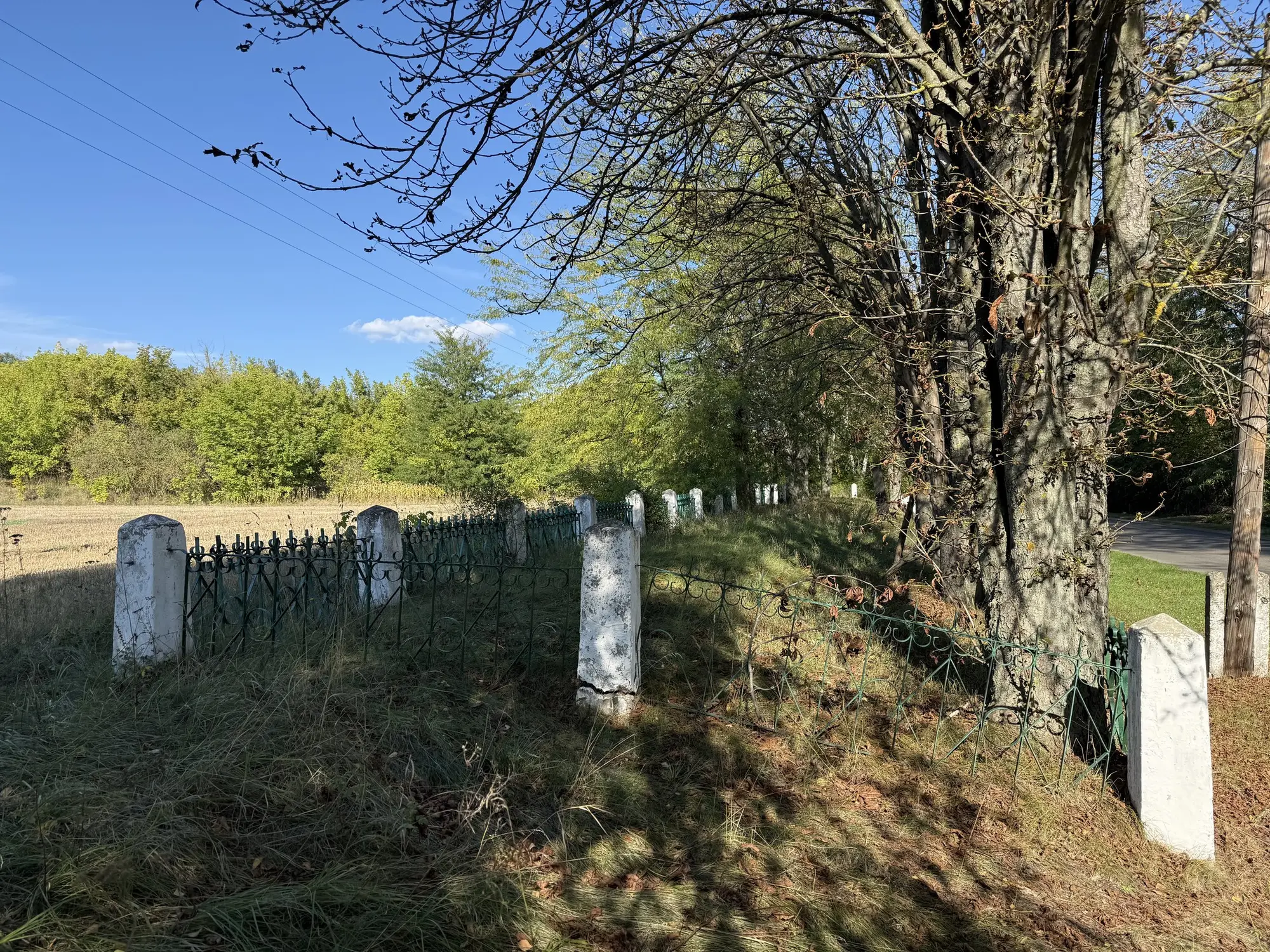
The mass burial site of the victims of the Nazi shooting of 1942. Today it holds a memorial obelisk and a fenced plot.
The story of this place
“The mass extermination of Jews was carried out by the German fascist invaders during the Second World War. Horodyshche, too, has its own ‘Babyn Yar’, where in the summer of 1942 the fascists exterminated a large part of the Jewish population of the town and neighbouring settlements.
The memorial to this tragic event is the obelisk and the mass grave on the Horodyshche – Mliiv highway. Eyewitnesses of this event are still alive. Among them are Halyna Artemenko from Mliiv and Prokip Leleka from Cherkasy.
This is what Halyna Artemenko recalls: ‘The German authorities told all the Jews of Horodyshche to take their valuables and come out onto the road. They promised that they would be sent to Palestine. But it was a deadly trap. That day all the inhabitants of the town were forbidden to go out into the street. Only from an attic, or from afar, from the riverbank, could one see the sad and alarming picture: the column of Jews set off towards the village of Mliiv. And there, before Mliiv, beside the road, they were all shot.’”
The mass murder near Mliiv was not the only crime against the Jewish population of the Horodyshche area. The research materials of Klavdiia Kolesnikova also mention shootings of Jews in Vilshana and Viazivok.
The circumstances of these events require separate research. They show that the Holocaust affected not only Horodyshche but also other settlements of the region.
Excerpt from Mykola Shcherbyna’s article “From the History of the Jewish Communities of the Horodyshche Area”, 16 July 2012. Translated from Ukrainian. Source: horodysche.org.ua/?id=278
The testimony of Nina Laskava
One of the most important testimonies about the tragedy is the account of Nina Rodionivna Laskava, born in 1934. Her family lived opposite the place where the mass grave is now located.
Nina Laskava’s memories were recorded in Mliiv by Yukhym Dyskin. In 2001 they were published in the newspaper «Nadezhda» under the title “Tragedy in Mliiv”.
“In the spring of 1942 I was in my ninth year. My parents’ house stood right opposite the place where the grave is now, across the road by the kindergarten. We heard then that in Horodyshche the Jews had been gathered at the Chkalov secondary school. They were told that they would be taken to Cherkasy, and from there somewhere by steamer down the Dnipro.”
According to Nina Laskava’s testimony, before the shooting the Germans and local policemen forced men from Mliiv to clear the area and dig a long pit. The next morning a column of more than 300 Jews was brought to the village under armed guard.
“I saw through the window how they began firing machine guns and people fell into the pit. During the shooting many policemen hid behind our house and shed. One of them covered his ears and wept, but most of them took part in the massacre. They did the shooting themselves, and then finished off the wounded in the pit.”
Nina Laskava also recalled people’s attempts to escape and told of a woman with a child named Mylodanova, who hid under a small bridge but were later killed.
Nina Laskava. Testimony recorded by Yukhym Dyskin. “Tragedy in Mliiv”. Newspaper «Nadezhda», 2001, No. 1. The quotations follow the text of the publication as provided. Translated from Ukrainian.
The Begelfer family
Among the Jewish families of Horodyshche who suffered during the Holocaust was the Begelfer family.
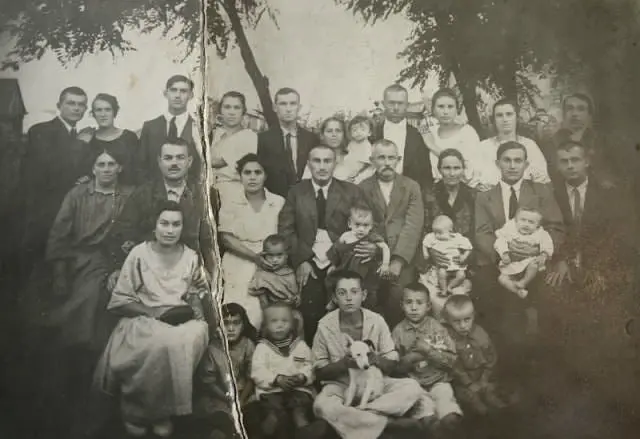
In memories recorded by the local historian Mykola Shcherbyna, Yukhym Lazarevych Begelfer said that his father, Leizer Itskovych Begelfer (1897–1981), worked as a shoemaker, and his mother, Henia Pavlivna (1906–1971), was a housewife. The family lived in the centre of Horodyshche.
At the beginning of the war Leizer Begelfer was mobilised into the Red Army. His elder brother Palti and his family, and his first wife Betia with their son and daughter, remained in occupied Horodyshche.
In 1942 they, together with other Jewish inhabitants of the town, were taken away supposedly for resettlement, but were shot near Mliiv.
After the war the surviving relatives continued to visit the mass grave.
Yukhym Begelfer recalled:
“My parents and my wife’s parents are buried in Horodyshche, and my wife’s brother in Mliiv. So we visit their graves all the time. We also stop at the mass grave on the outskirts of Mliiv. My relatives are buried in it. Adults and children, innocent victims of the Holocaust.”
From the memories of Yukhym Lazarevych Begelfer, published by Mykola Shcherbyna in the article “‘Babyn Yar’ on the Outskirts of Mliiv-2”, 2013. Translated from Ukrainian.
The site of the mass shooting
Near the road from Horodyshche to Mliiv lies the mass burial site of Jews murdered during the Nazi occupation.
Archival testimony on the mass shooting of the Jews of the Horodyshche area
On 7 March 1944 the Horodyshche commission for the investigation of the crimes of the Nazi occupiers drew up an act recording the circumstances of the mass murder of the Jewish population of the district.
According to the document, on 29 March 1942 more than 300 Jews, mostly women, children and elderly people, were forcibly assembled at the town police. From there they were led under escort along the Mliiv road to the Sadstantsiia tract, where a ditch had been prepared for the shooting.
The document names the organisers and perpetrators of the crime, describes the circumstances of the murder and the results of the inspection of the mass grave.
The transcription of the act in the archive was made and provided to the project by Klavdiia Kolesnikova, researcher of Jewish history and director of the Regional Museum of Jewish History “We Come from the Shtetl”.
Archival document. The act of the Horodyshche commission of 7 March 1944, full text in the original language. Read the act
Historical publications contain certain discrepancies regarding the exact dating of the final liquidation of the ghetto and of the shooting. The date of 29 March 1942 is therefore given in this project in accordance with the commission’s act of 7 March 1944.
Names that it has been possible to establish
Hundreds of Jews of Horodyshche and the surrounding settlements, shot by the Nazis in 1942, are buried in the mass grave near Mliiv. Most of their names still remain unknown.
Thanks to archival documents, eyewitness memories and family testimonies, researchers have been able to recover some of the names of the dead. The information collected concerns both the mass shooting near Mliiv and other killings of Jews of the Horodyshche area during the occupation.
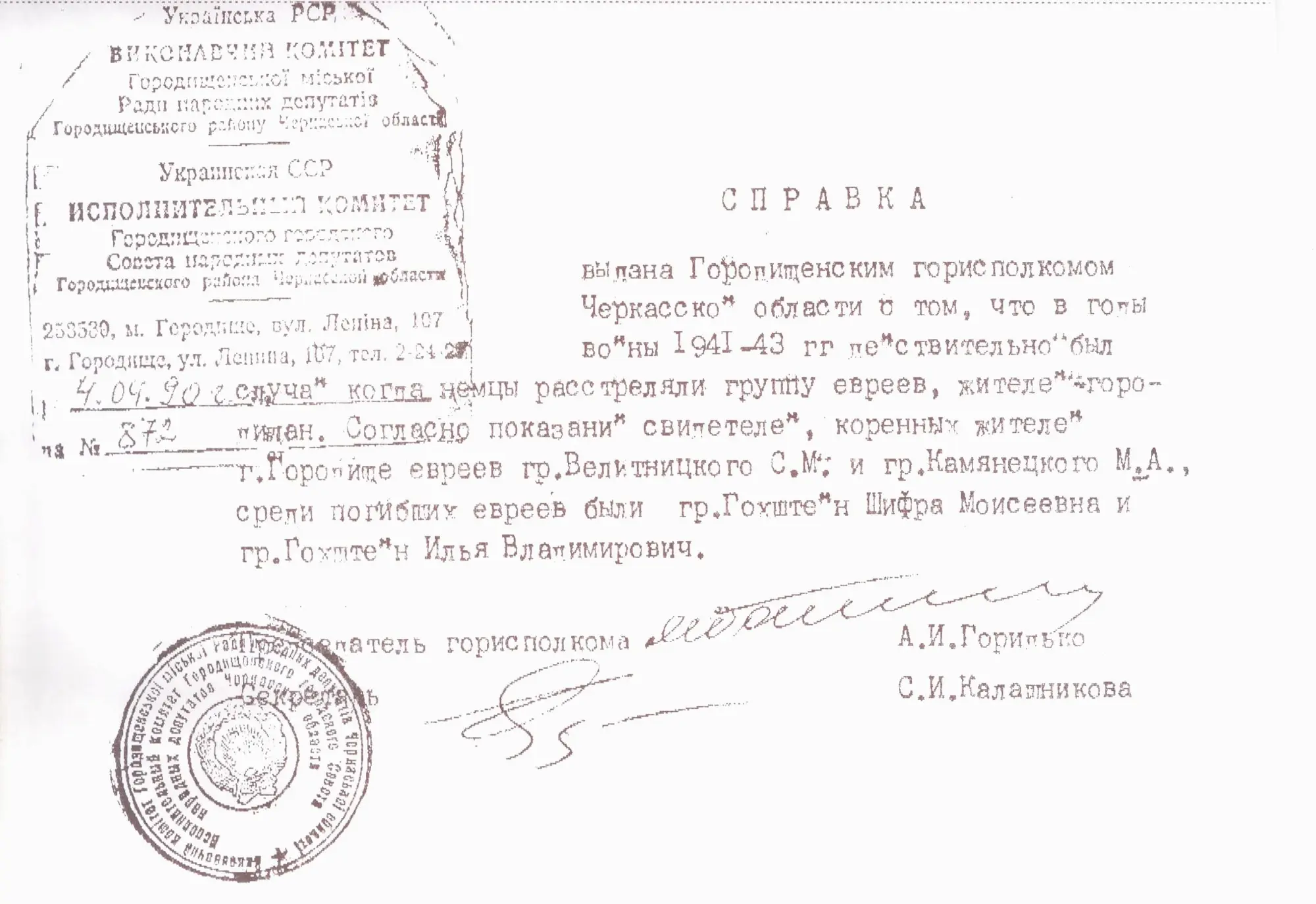
- Shyfra Musiivna Hokhshtein and Illia Volodymyrovych Hokhshtein. Their names are given in a 1990 certificate of the Horodyshche town executive committee on the basis of the testimony of local inhabitants S. M. Veletnytsky and M. A. Kamenetsky. The research list provided gives the date of the certificate as 4 April 1990. The spelling of the names and the date of the document need to be checked against the archival copy.
- Hryhorii Melnyk, born about 1926, a student of the Horodyshche agricultural technical college. His death during the shooting near Mliiv was recalled by Yurii Fedosiiovych Suk, who heard of his friend’s death from a teacher.
- Palti (Paltiel?) Itskovych Begelfer and members of his family. According to the memories of Yukhym Lazarevych Begelfer, his father’s elder brother Palti remained in occupied Horodyshche with his family and was killed during the mass shooting near Mliiv. The names of the other members of the family still need to be established.
- Betia Begelfer and her son and daughter. Betia was the first wife of Leizer Itskovych Begelfer. According to family testimony, she and her two children were killed near Mliiv in 1942. The names of the children remain unestablished.
- Roza and Burakh Vynokur and their son Abrasha (Abram). Inhabitants of Horodyshche who remained in the town during the occupation. According to the family testimony of Yukhym Syhalov, they were shot near Mliiv on 29 March 1942. Their names are commemorated in the Hall of Names of the Yad Vashem memorial complex in Jerusalem.
- The wife of the teacher Mylodanov and his daughter Sonia. According to the memories of Halyna Artemenko, the wife and daughter of the teacher Mylodanov were Jewish, and Sonia hid for some time with her family. Nina Laskava recalled that a woman with a child named Mylodanova tried to hide under a small bridge but were killed. The circumstances of the death of this family and the identities of the people mentioned require further clarification.
- The Kamenetsky family, approximately four people. According to the memories of Mykhailo Abramovych Kamenetsky, members of his family were shot in February 1942. This dating differs from the date of the mass shooting near Mliiv given in the 1944 act. The names and the exact circumstances of the deaths of these people still need to be established.
- Manuil Shtrofer, born in 1920, an inhabitant of the village of Mliiv. According to the Book of Sorrow of Ukraine, he was killed in September 1942 and buried in the mass grave at the village cemetery. His name therefore belongs to the history of the victims of the Nazi occupation in the Horodyshche area, but the available information does not allow him to be counted among those killed in the March shooting near the Sadstantsiia tract.
Note. This list is not a complete list of the dead and brings together information of varying degrees of documentary confirmation. The names are kept as given in the archival and research materials provided. For some people the date and place of death or burial require further verification. Sources: the research “List of Jews of the Town of Horodyshche and the Horodyshche District Shot on 29 March 1942 on the Outskirts of the Village of Mliiv”, compiled by Klavdiia Kolesnikova; materials of Mykola Shcherbyna; testimonies of Mykhailo Kamenetsky, Halyna Artemenko, Nina Laskava, Yurii Suk, Yukhym Begelfer and Yukhym Syhalov; Book of Sorrow of Ukraine, vol. 1, p. 70.
Testimony about Mykola Zhuk and a rescued inhabitant of Horodyshche
According to information in a Ukraine Jewish Heritage publication, during the Nazi occupation Mykola Zhuk, a native of the village of Dyrdyn, was deputy head of the local auxiliary police. After the war he ended up in the USA. In the early 1980s the Soviet side sought his extradition on charges of involvement in the extermination of the Jews of Horodyshche.
While these circumstances were being examined, American representatives interviewed Herhel, one of those who survived the shooting near Mliiv.
According to the published account, Herhel did not confirm that Zhuk had personally taken part in the shootings. He recalled that while fleeing he ran out of the bushes straight towards Zhuk. Zhuk could have killed him or handed him over, but turned away and let him escape.
According to Ukraine Jewish Heritage, the USA refused to extradite Mykola Zhuk. This testimony is important for research into the circumstances of the tragedy and the role of Ukrainian participants.
The Vynokur family: memory preserved in Israel
The story of another Jewish family of Horodyshche has been recovered thanks to the memories of Yukhym Yosypovych Syhalov, who lived in Israel.
His mother, Frida Burakhivna Vynokur (1921–1996), was born in Horodyshche. Before the war she married Yosyp Syhalov and moved to Kharkiv. In the summer of 1941 the couple and Frida’s younger sister, Ida Vynokur, were evacuated to Siberia, where they survived the war.
Frida’s parents, Roza and Burakh Vynokur, and her younger brother Abrasha remained in Horodyshche. According to family testimony, all three were killed during the mass shooting of Jews near Mliiv in March 1942.
Yukhym Syhalov first learned the details of this tragedy when he visited Horodyshche with his parents. He later preserved the family’s story for his children and grandchildren.
Yukhym Syhalov commemorated the names of Roza, Burakh and Abrasha Vynokur in the Hall of Names of the Yad Vashem memorial complex in Jerusalem.
People who rescued the persecuted
The history of the Holocaust in the Horodyshche area also preserves testimonies about people who, at the risk of their own lives, rescued Jews from Nazi persecution.
According to Yad Vashem materials, in September 1942 Mykhailo and Hrunia Kulychenko sheltered Biana Maksymenko and her little daughter Tetiana, who had escaped from the Medzhybizh ghetto. Later the mother and child hid with Mariia Ruzhyna in Khlystunivka, and later still with Melaniia Kozachenko. Thanks to the help of these people they were able to stay in hiding until the liberation of the territory in February 1944.
On 31 May 1999 the Israeli memorial centre Yad Vashem recognised Mykhailo and Hrunia Kulychenko, Mariia Ruzhyna and Melaniia Kozachenko as Righteous Among the Nations for rescuing Jews during the Holocaust.
This story is a testimony to human solidarity and mutual help in the Horodyshche area during the years of the Nazi occupation.
The Jewish community of Horodyshche after the Second World War
After the end of the war only some of the Jewish families returned to Horodyshche.
A Ukraine Jewish Heritage publication mentions the Kamenetsky, Roitman and Veletnytsky families and other inhabitants, and also that in 1994 the Jewish community was re-established in Horodyshche, with Mykhailo Kamenetsky as its first head.
In the post-war decades the Jews of the town kept alive the memory of the dead, looked after the burial places and maintained family ties.
In the following decades, especially after the collapse of the Soviet Union, some of the Jewish inhabitants emigrated to Israel, Germany, the USA and other countries.
In 2016 the number of Jewish inhabitants of the town was approximately 10 people.
Memory of those killed near Mliiv
The first reinforced-concrete obelisk on the mass grave near Mliiv was erected in 1945. In the post-war decades the memory of the dead was kept alive by the Jewish inhabitants of Horodyshche and the relatives of those who were shot.
According to the testimony of Yukhym Begelfer, in the 1960s the elder of the Jewish community, Solomon Veletnitsky, organised the collection of funds to install a fence around the mass grave.
“And in the 1960s the elected elder of the community, Solomon Veletnitsky, collected money and put up a small fence. On his initiative, too, members of the community brought from the Jewish cemetery near the bus station the top of a granite monument. It was fixed onto the already existing pedestal. It was the upper part of the gravestone of a former elder of the Jewish community from before the revolution.”
Nina Laskava recalled that the relatives of the dead came to the mass grave every year on 9 May. Over time such visits became fewer.
These testimonies preserve the history not only of the memorial itself but also of the people who for decades cared for the memory of the dead.
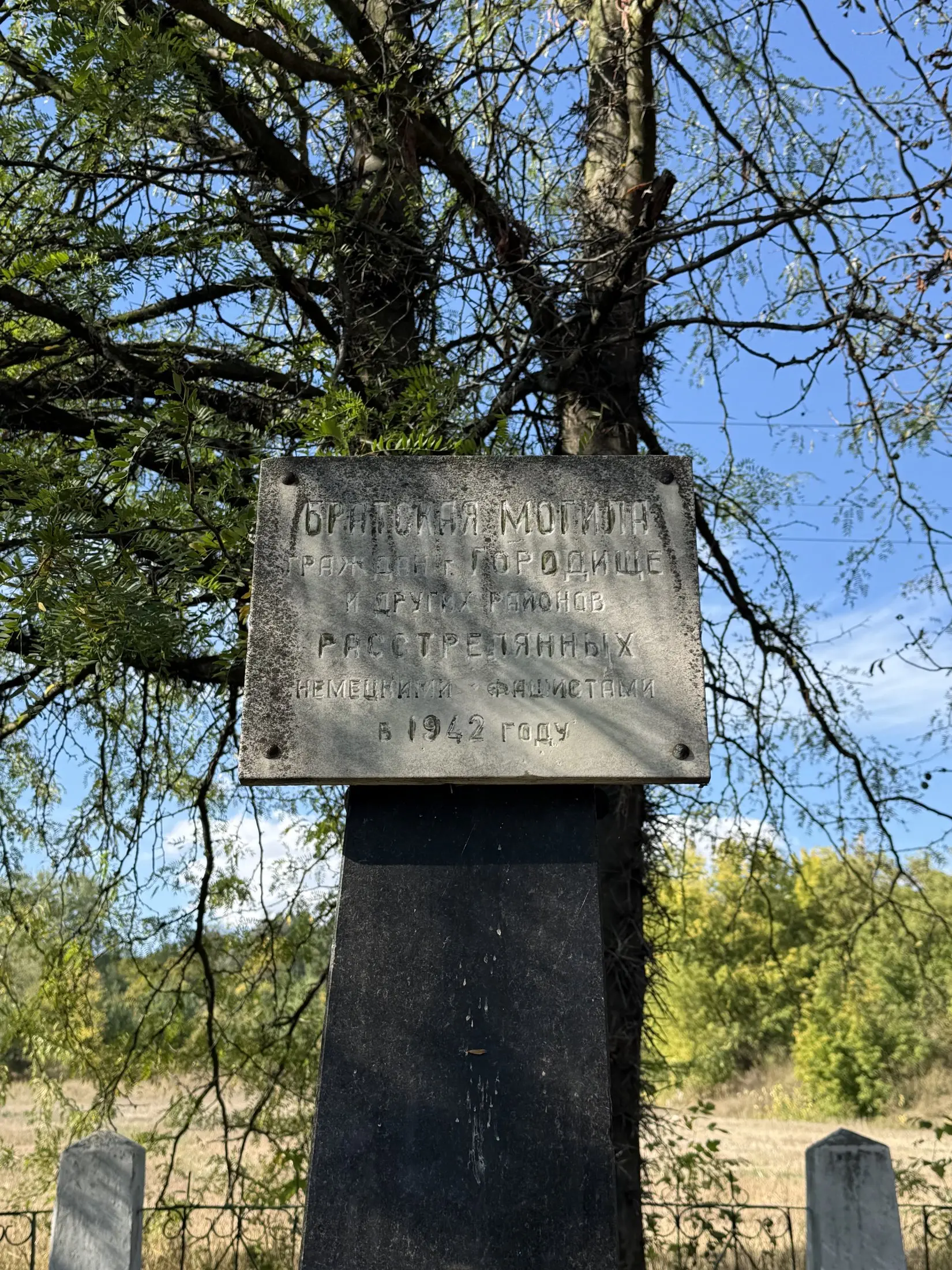
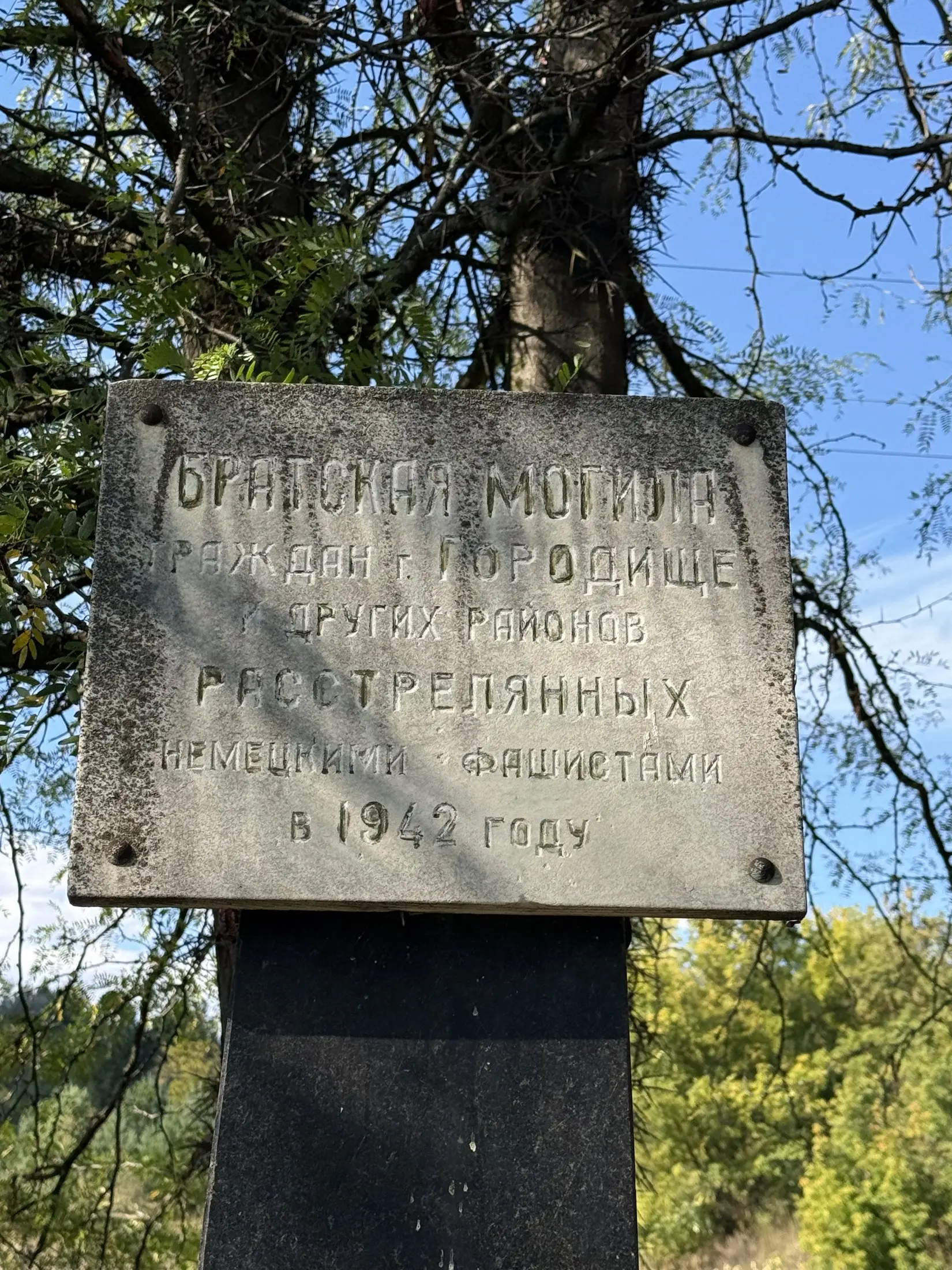
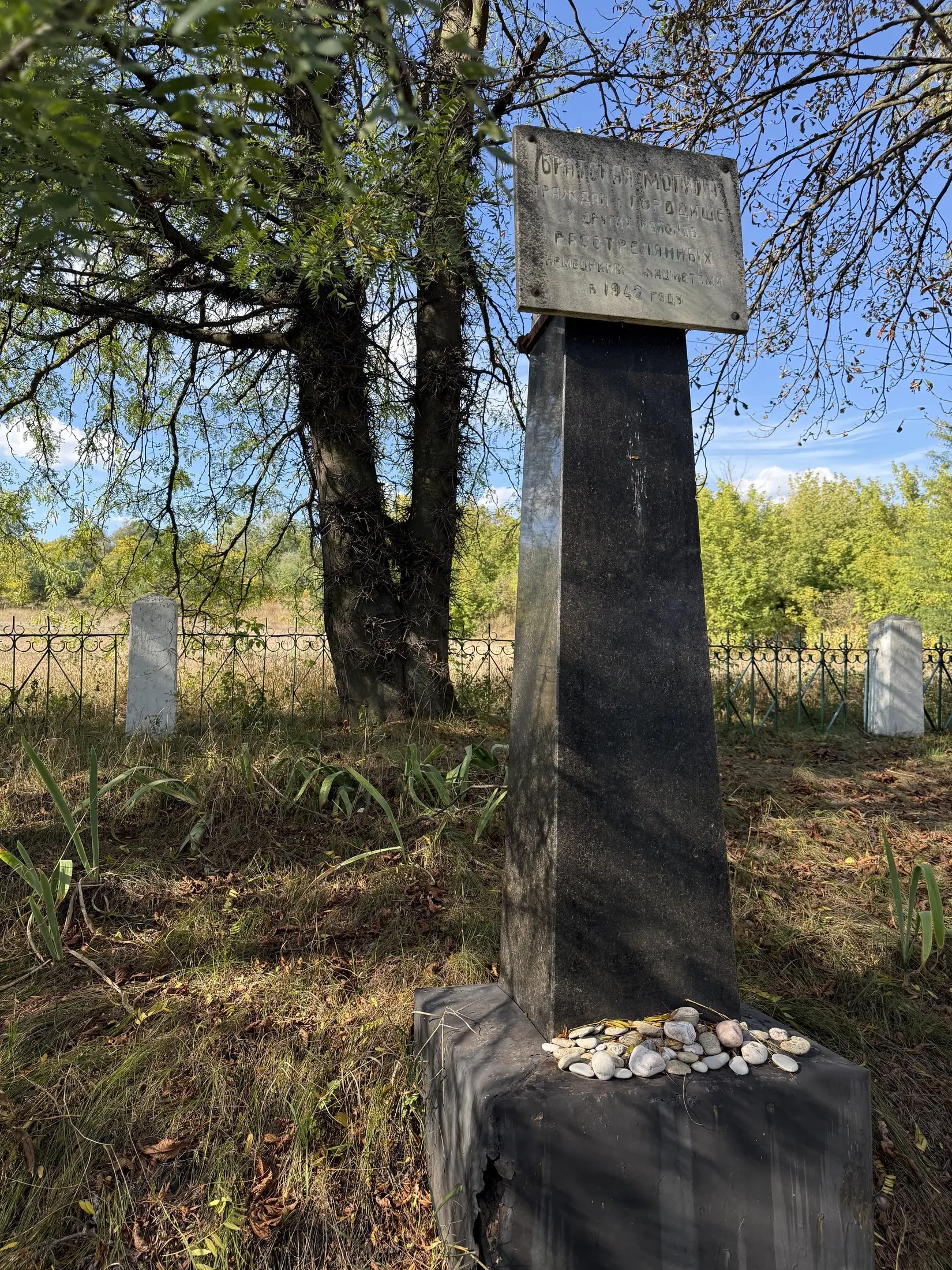
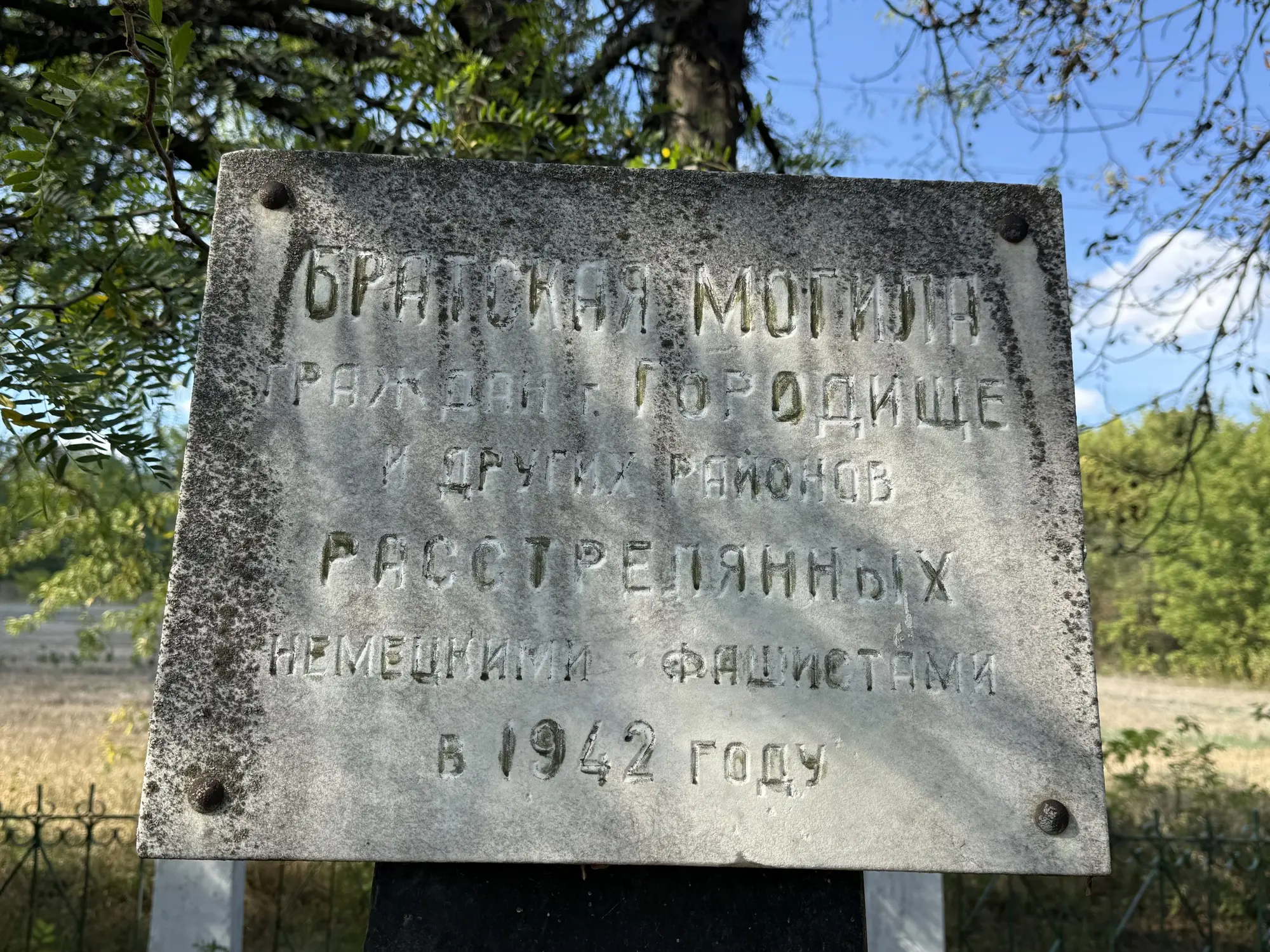
The memorial plaque states that inhabitants of Horodyshche and other districts, shot by the Nazis in 1942, are buried here.
Although the inscription itself does not name the nationality of the victims, archival documents and historical research attest to the connection of this burial with the mass murder of the Jewish population.
Memory today
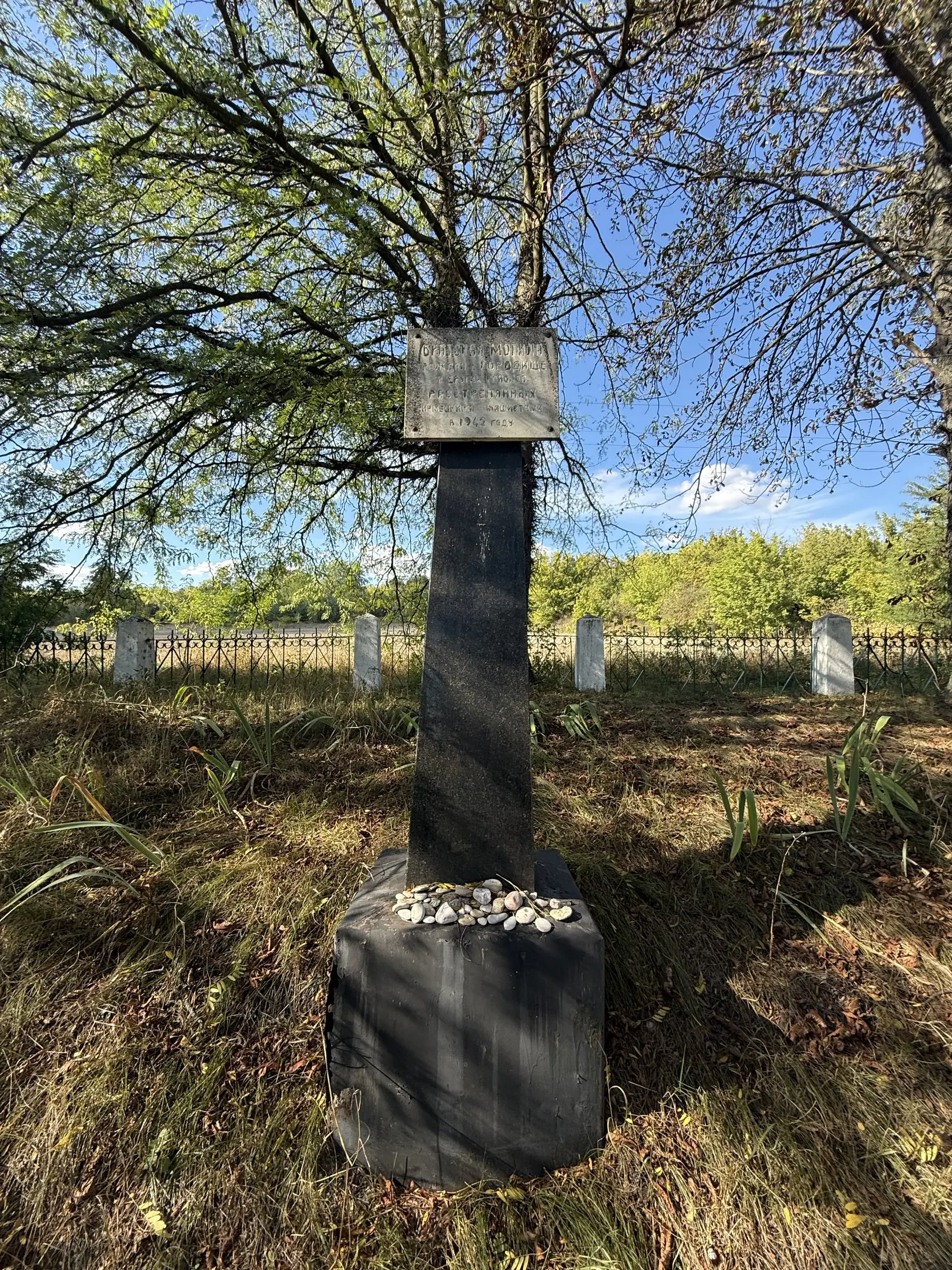
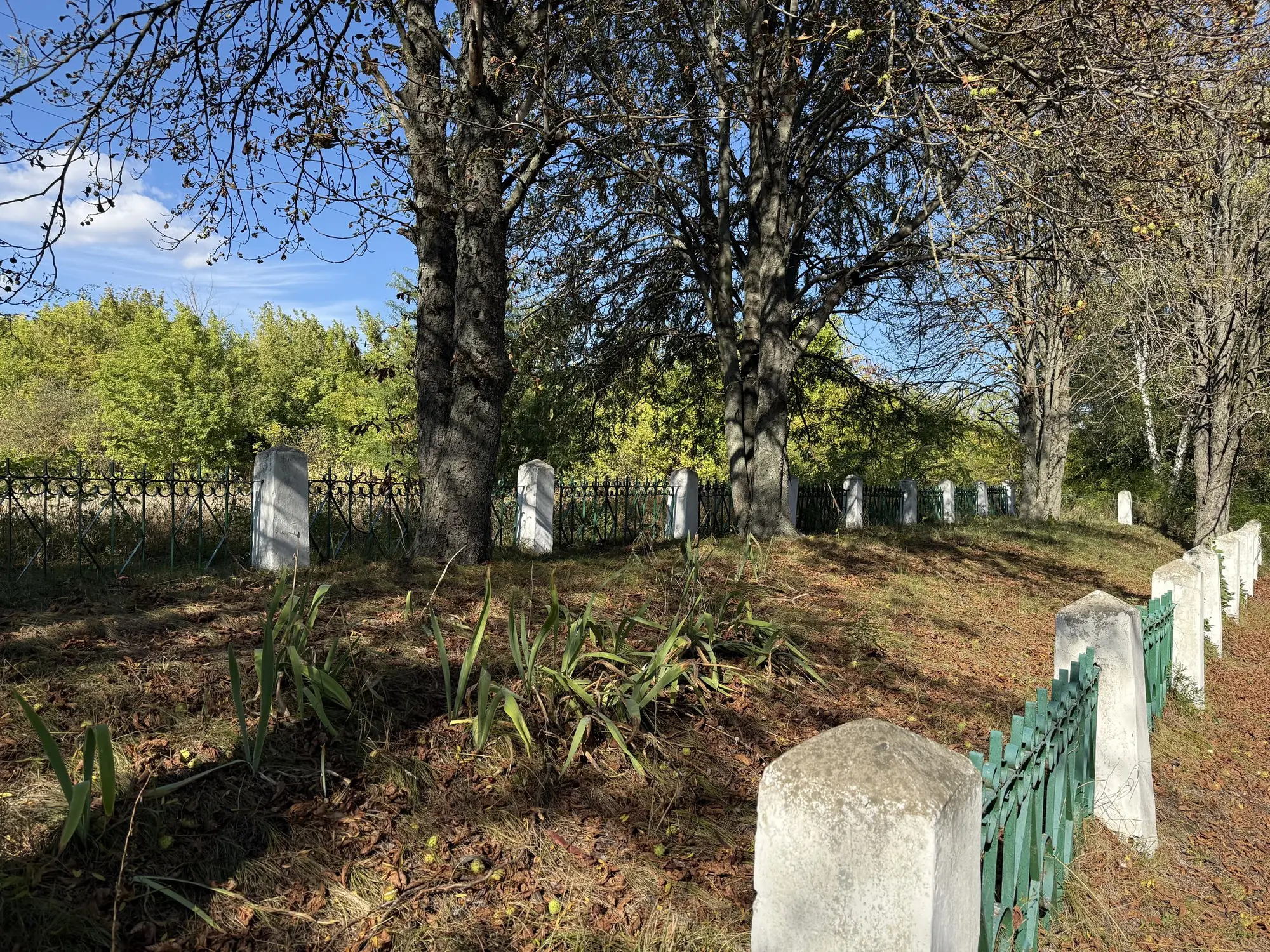
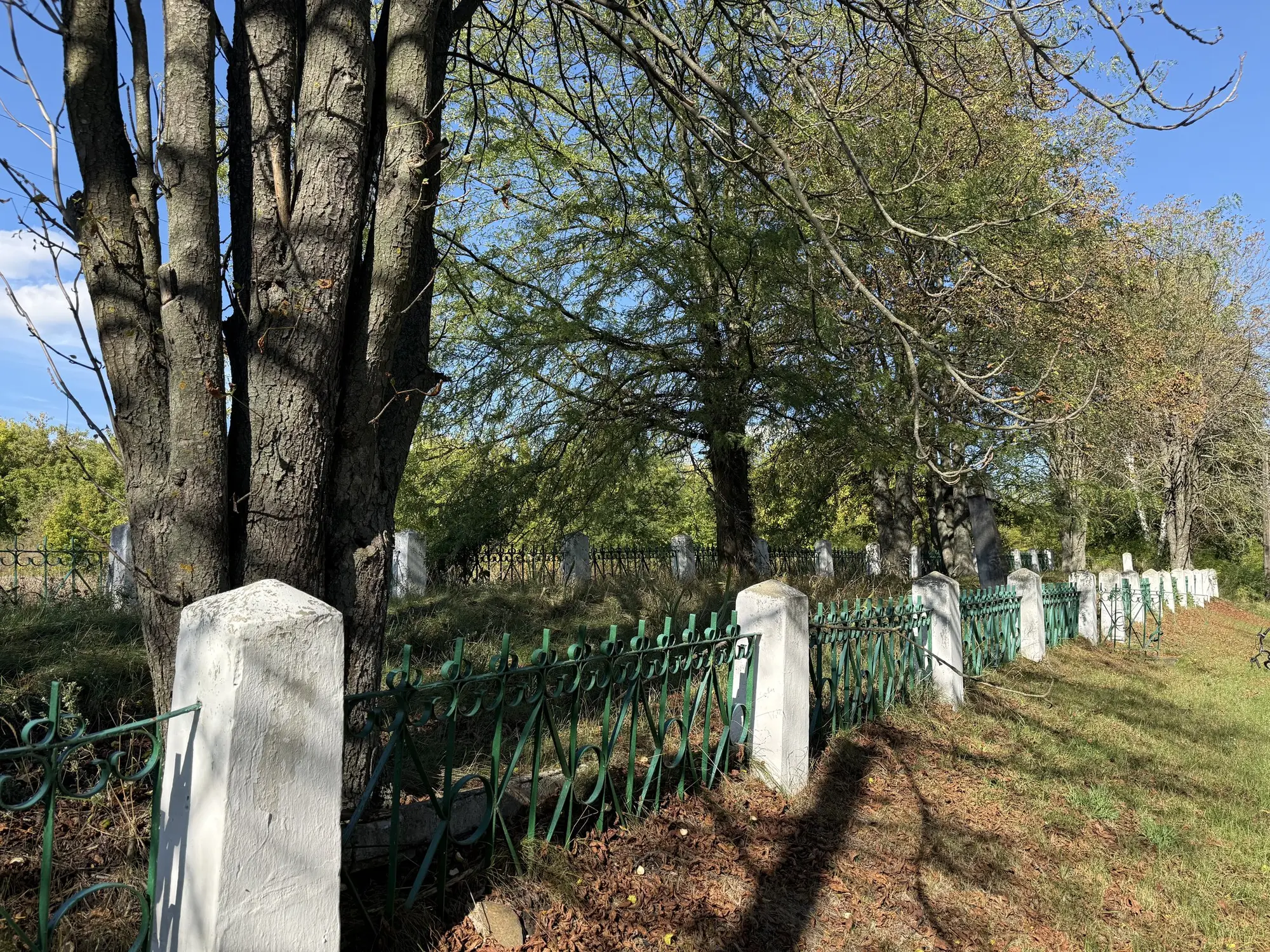
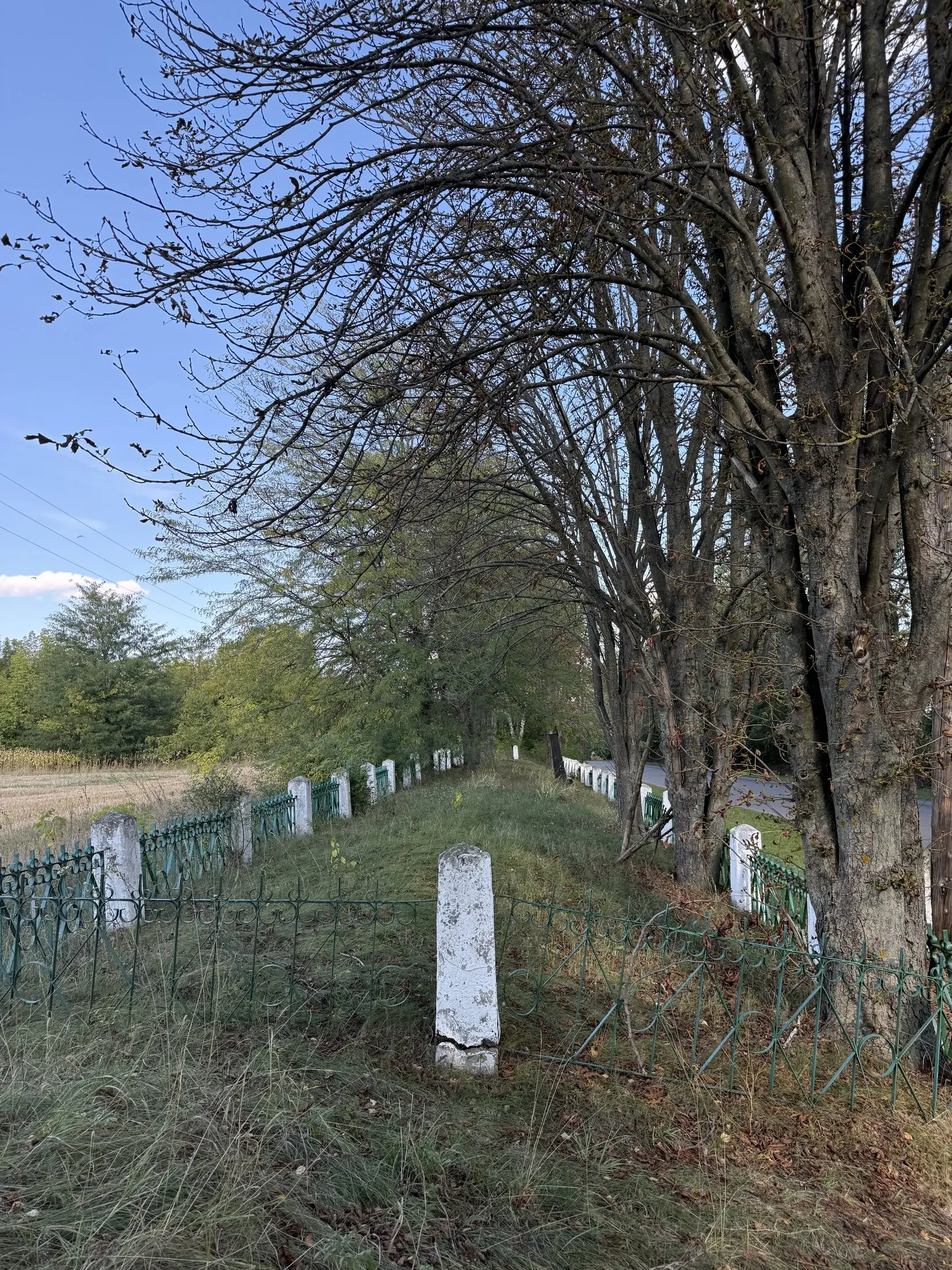
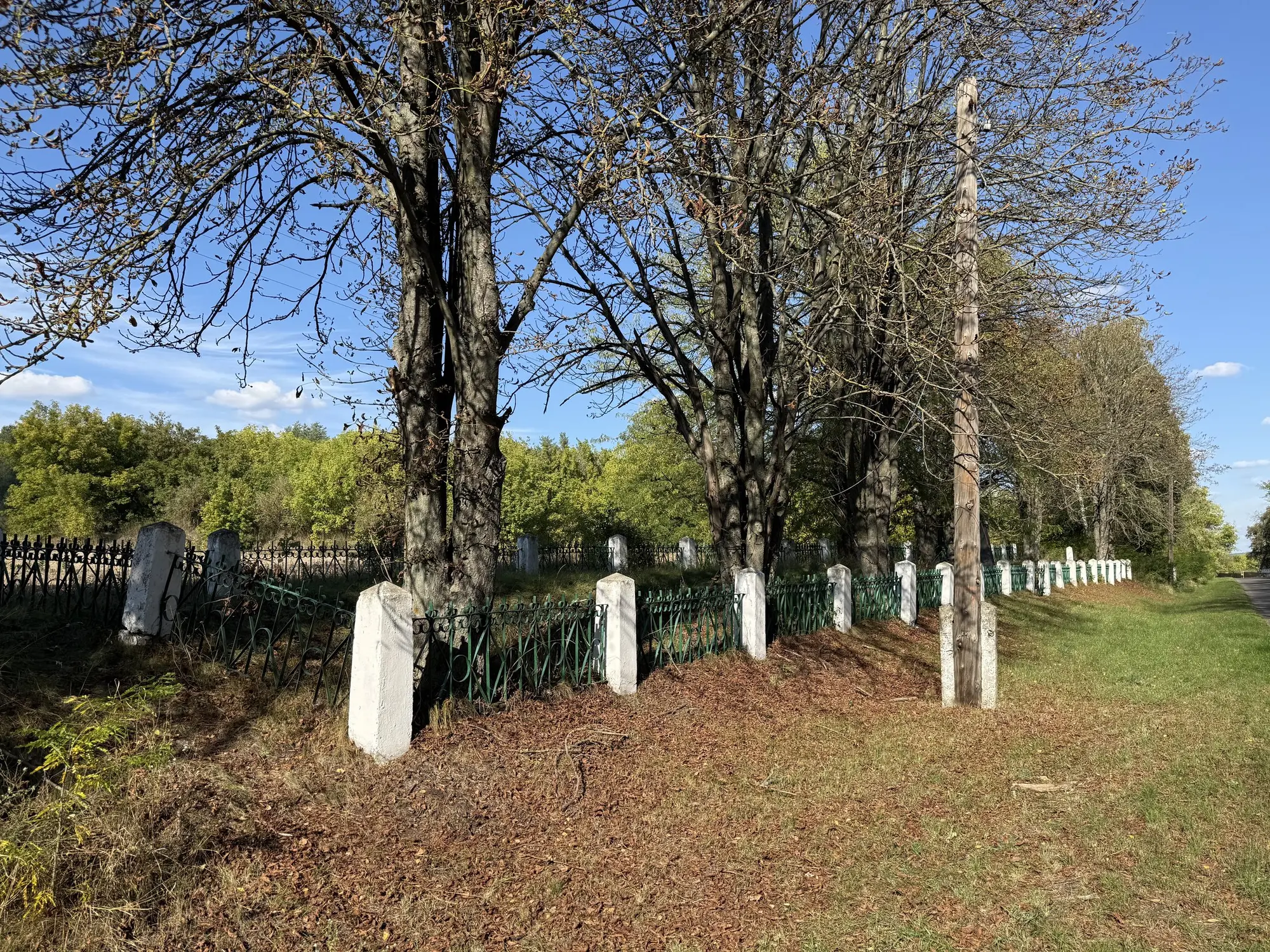
The memorial site has survived near the road, among trees. Its area is enclosed by a metal fence with concrete posts.
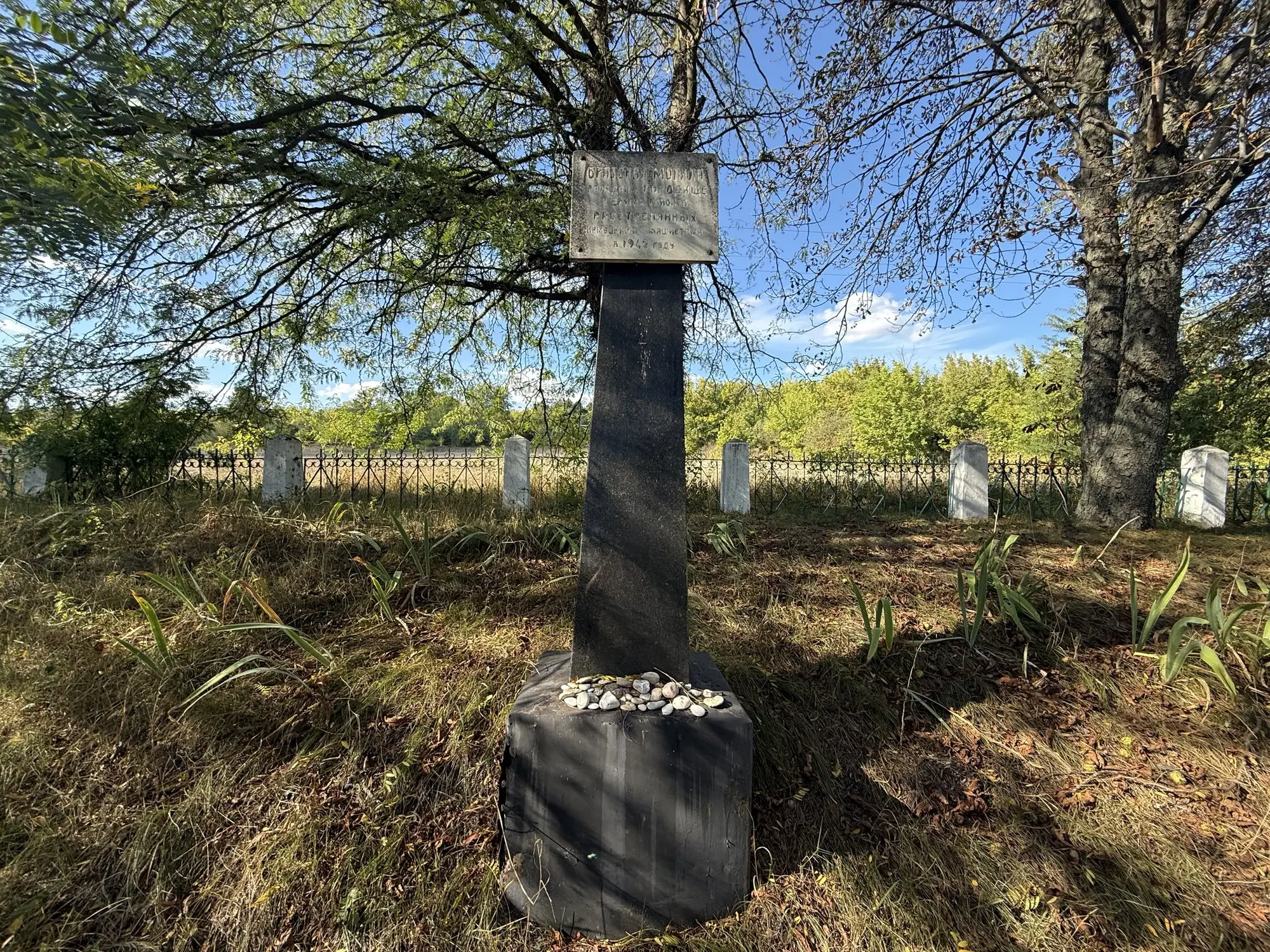
In the centre stands a dark obelisk with a memorial plaque.
On the base of the monument small stones left by visitors can be seen. Placing stones on graves is a traditional way of honouring the dead in Jewish culture.
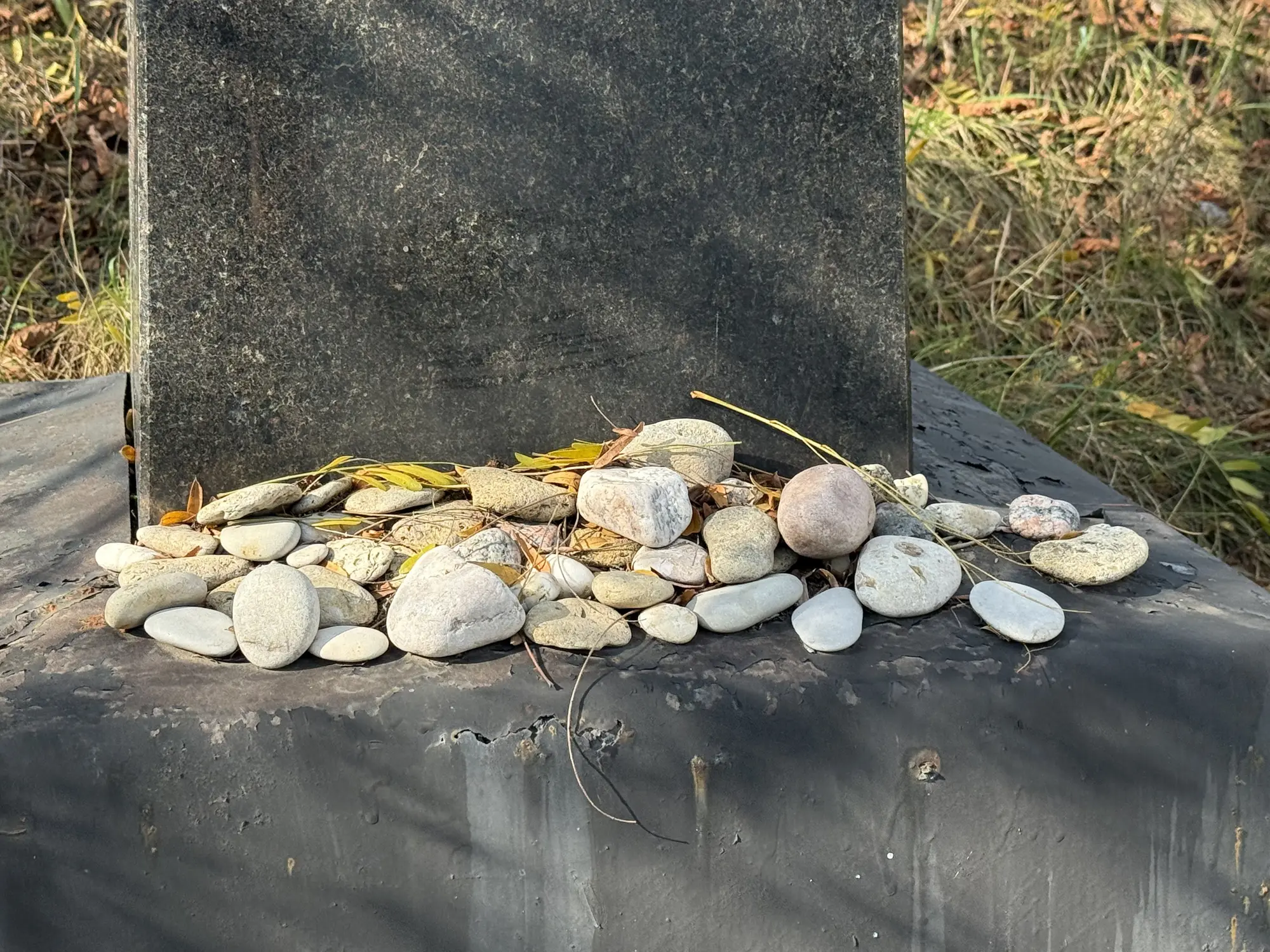
The contemporary photographs of this site were taken by Svitlana Liakhovets as part of the project “Jewish Memory of Horodyshche”.
They document not only the memorial but also the present condition of the site, which remains an important testimony to the tragic history of the town.
From other sources
The testimony of a survivor
Semyon Gergel, born in 1927, survived this shooting together with his mother. In June 1978, in Cherkasy, he described it during the court proceedings against the former policeman Nikolai Zhuk.
According to him, policemen took people from their homes at dawn to the courtyard of the district police. The sick, the elderly and women with infants were carried on carts, the rest marched in a column down the Mliiv road. A ditch had already been dug beside it.
When the shooting began, his mother pushed him into the ditch and fell with him. At night they crawled out and made their way towards Horodyshche. Semyon Gergel gave a different date for the shooting, 5 April.
Source: Yad Vashem, Sadstantsiya
Inscriptions
- The plaque on the obelisk White slab, raised letters. In Russian.
Photo survey
All photographs, 15